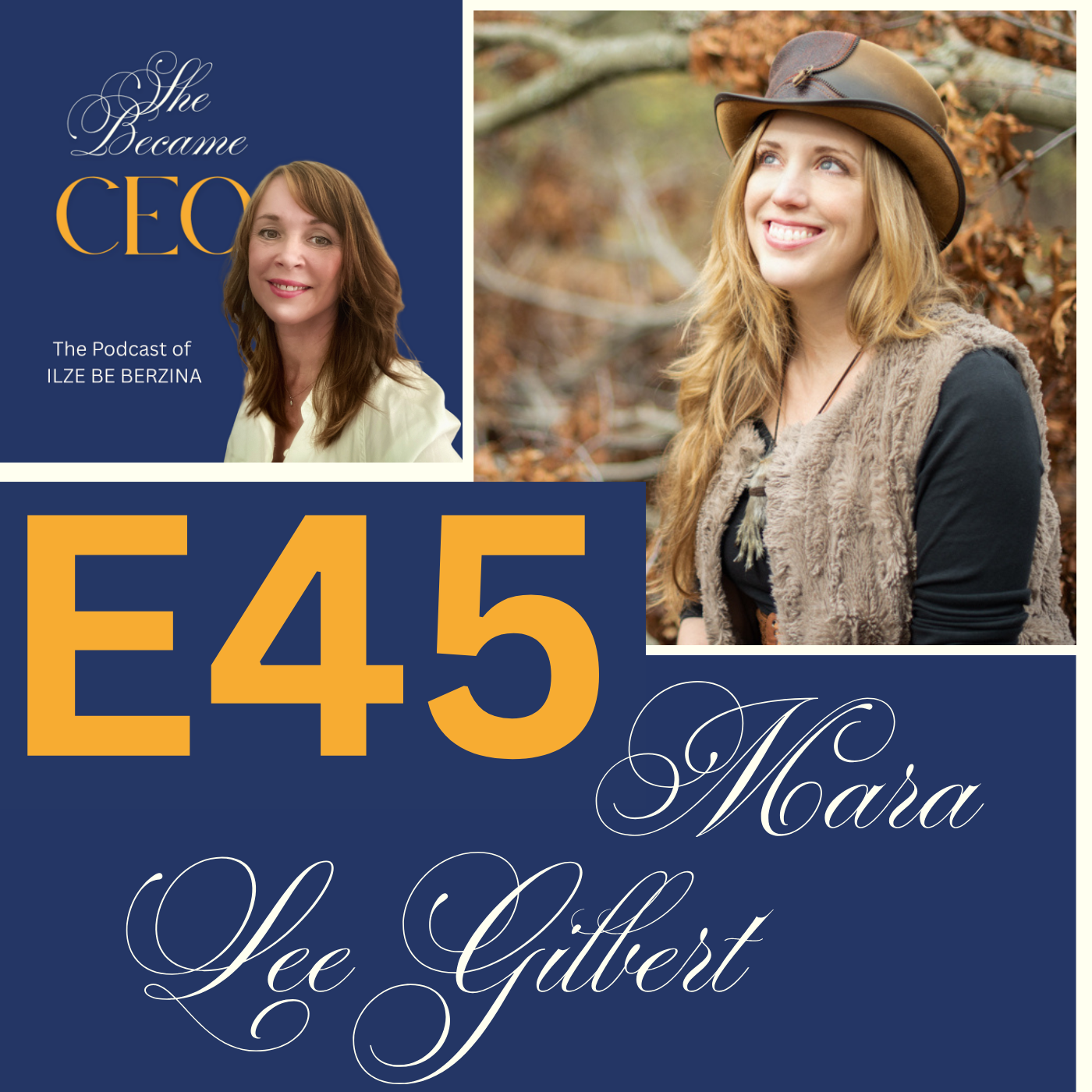
Mara Lee Gilbert on Trauma, Inner Wisdom, and the Body's Truth. (Episode 45)
In Episode 45, I reconnect with Mara Lee Gilbert for a grounded, thoughtful conversation about trauma, the nervous system, embodiment, and the kind of wisdom that comes from lived experience rather than theory.
We speak about how early conditioning shapes behavior in ways that often remain invisible, even to people who are reflective and self-aware. Trauma doesn’t always show up as crisis. It often appears in subtle, socially rewarded patterns—over-functioning, caretaking, or staying compassionate in situations that quietly deplete us.
Mara shares how insight alone rarely changes these patterns. The nervous system carries memory, and change happens when the body feels enough safety to reorganize.
Emotional Truth and the Nervous System
A central part of the conversation focuses on emotions—especially anger and rage—and the expectations placed on how healing is “supposed” to look. Mara brings nuance to this topic, emphasizing that emotional truth doesn’t follow scripts.
Some people experience anger clearly. Others notice anxiety, grief, or compassion instead. Each response reflects how a particular nervous system processes experience. The absence of rage isn’t a sign of something missing; it’s simply information.
From there, the discussion widens to how the nervous system influences desire, intimacy, achievement, and satisfaction. Many people reach goals only to discover that the inner state they expected never arrives. When attention shifts from outcomes to internal signals, the direction of change often becomes clearer.
Inner Wisdom, Peace, and Embodiment
Throughout the episode, inner wisdom emerges as something practical and embodied. It shows up as a felt sense that becomes easier to recognize when old blocks soften. When people learn to trust that signal, it influences everyday decisions—relationships, boundaries, work, and direction.
Toward the end of the conversation, we reflect on peace not as an external condition, but as an embodied state. Mara describes peace as a frequency that can be cultivated even while witnessing conflict. This perspective emphasizes agency and presence rather than control.
Why This Episode Matters
This episode will resonate with listeners who have done significant inner work and still sense unfinished layers, who recognize patterns without rushing to fix them, and who value depth without dramatic narratives. It’s a conversation that respects timing, complexity, and the intelligence of the body.
To hear the full episode 45, click this link or the image below.