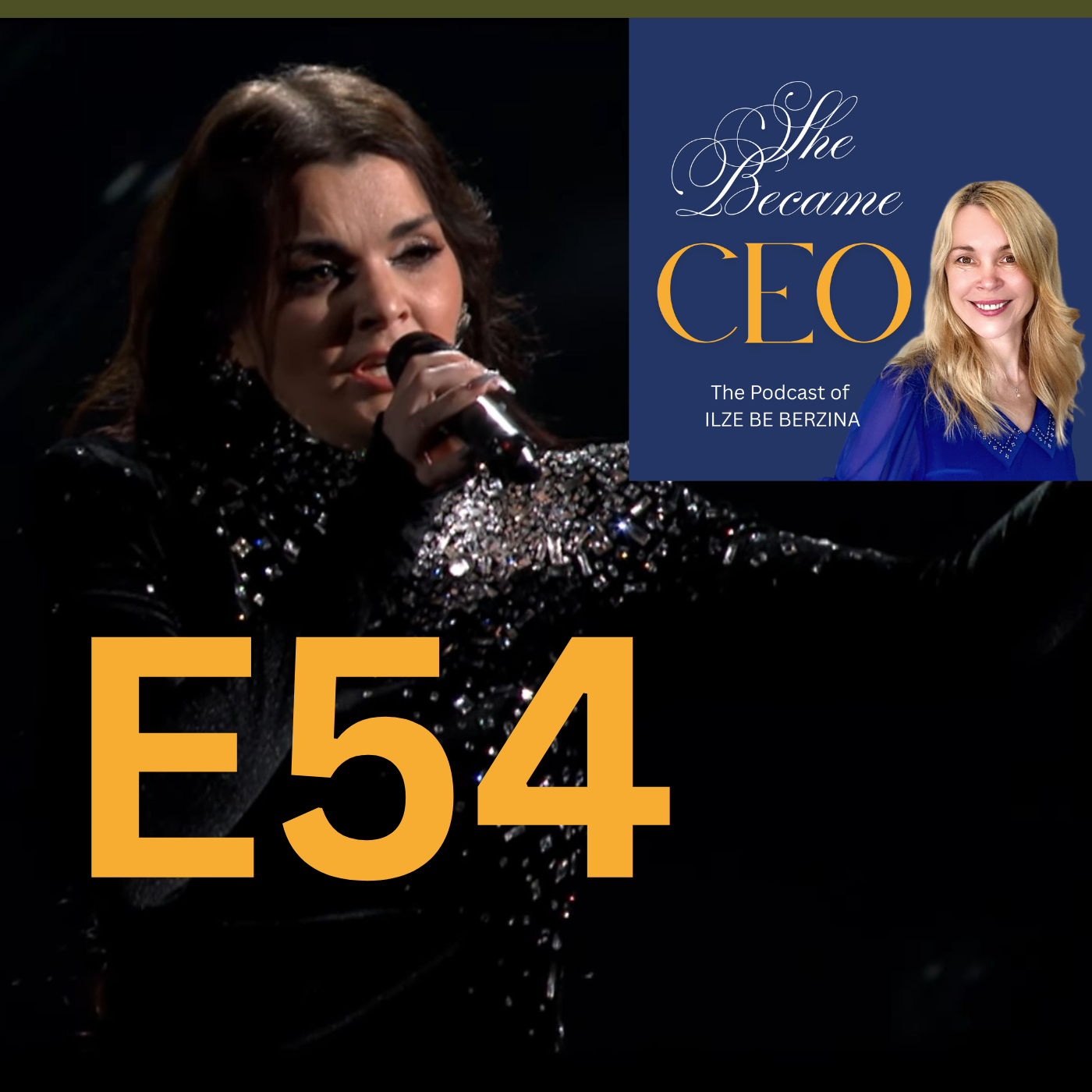
Storytelling through Stage Art: Latvian Singer Atvara's Masterful Performance
In this episode, I wanted to try something different.
Instead of interviewing a guest or sharing a personal reflection, I decided to examine how storytelling works through stage art. The performance I chose for this experiment comes from Latvia’s national Eurovision selection contest, Supernova, where singer Atvara performed her song “Ēnā” (“In the Shadow”).
The performance won the competition and will represent Latvia internationally. But what interested me most was not only the song itself. It was the way the story was told.
The staging combined music, lighting, digital effects, and symbolism to communicate a narrative that viewers could sense even if they didn’t understand the lyrics.
That raises an interesting question:
Can art communicate a story even when the audience does not understand the language?
A Story Told Through Visual Symbols
At the beginning of the performance, the stage is almost entirely dark. A narrow beam of light reveals the silhouette of the singer, creating the impression that she is standing in a doorway.
As the song unfolds, the visuals begin to transform.
At first, the shadow appears to belong to the singer herself. But suddenly something unexpected happens: the shadow turns into the figure of a little girl.
Later, the stage fills with swirling fragments of light that resemble pieces of shattered glass, floating around the singer and responding to her gestures.
Even without the lyrics, viewers can sense that something emotional is happening.
The question becomes:
What do these symbols represent?
The little girl in the shadow...
The shattered glass...
The singer seemingly controlling those fragments...
These visual elements invite the audience to interpret the story for themselves.
Listening to Audience Reactions
To explore how effective this storytelling was, I included reactions from several YouTubers who had watched the performance. Most of them did not understand Latvian, and some deliberately avoided looking up the lyrics before reacting.
Yet many still picked up emotional cues.
Some viewers noticed the contrast between the singer and the shadow, realizing that the shadow represented someone else. Others were struck by the dramatic staging and the technology used to create the illusion of the floating glass fragments.
One reaction described the performance as a powerful visual experience, noting how the stage design and computer-generated effects added depth to the music.
Another viewer speculated that the shadow of the girl might represent childhood or growing up.
Even without understanding the lyrics, people were clearly trying to decode the message.
That is the power of visual storytelling.
The Meaning Behind the Performance
Later in the episode, the deeper meaning of the performance becomes clearer.
The shattered glass symbolizes alcohol, and the story reflects the childhood experience of growing up with a parent struggling with alcoholism.
This is not just a fictional story. It is Atvara’s personal story from her own childhood.
In an interview after the performance, she explained that she wanted to speak openly about the issue and encourage others to step out of their shadows.
Why This Matters for Storytelling
What fascinated me about this performance is how effectively it communicated emotion even across language barriers.
Most viewers could not identify the exact meaning of the symbols. But many felt that the performance was deeply emotional and personal.
And that is often the first step in storytelling.
Before an audience understands the message intellectually, they must first feel something.
Art—whether through music, stage design, or imagery—can create that emotional entry point.
Once curiosity is triggered, the conversation begins.
Did the Message Reach the Audience?
From the reactions I observed, the performance clearly captured attention.
Viewers were curious. They tried to interpret the symbols. They wanted to know the story behind the imagery.
And that curiosity is exactly what strong storytelling is meant to achieve.
Not every viewer will interpret the story the same way. Some messages resonate deeply with certain people and less with others.
But if a performance makes people pause, feel something, and ask questions, then it has already succeeded in opening a conversation.
In my opinion, Atvara and her team accomplished that remarkably well.
Watch It Here:
Listen to the Podcast
If you'd rather listen to the audio only, look for Episode 54 of the podcast "She Became CEO" on your favorite podcast platform.
Join the Conversation
What did you see in this performance?
What do you think the shadow represents?
And did the stage visuals help communicate the message even without understanding the lyrics?
I’d love to hear your thoughts.