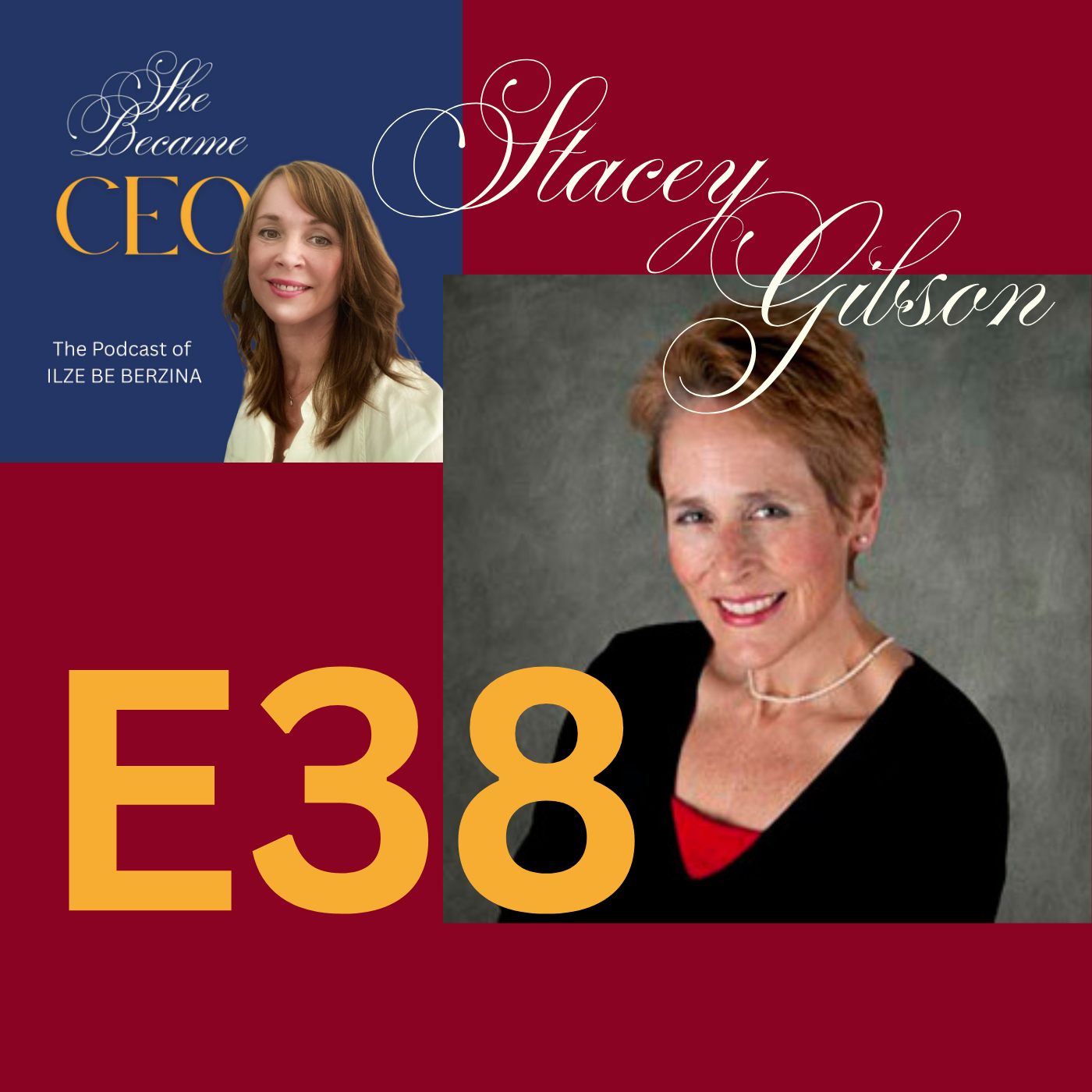
Franchising, Career Freedom & Second Chances: A Conversation with Stacey Gibson (Episode 38)
Many of us reach a moment in the second half of life where the questions get louder:
What comes next?
What kind of work supports the life I actually want?
How do I build stability and meaning?
For me, those questions have been growing stronger. I’ve been exploring different ways to diversify income and create more security — but also more freedom. One of the topics I’ve been curious about, yet admittedly confused by, is franchising.
So, for Episode 38 of She Became CEO, I invited someone who understands both the numbers and the human side of this world: Stacey Gibson, a Career Ownership Coach with The Entrepreneur’s Source and a seasoned marketing professional with over 30 years in corporate and franchise environments.
Her journey, her clarity, and her emotional honesty created one of the most grounded conversations I’ve had on this podcast.
What Franchising Really Is — And What Most People Get Wrong
Before we dove into Stacey’s story, I shared a definition from Investopedia to set the stage:
A franchise is a business model where the franchisor (brand owner) licenses its operations, products, branding, and “business know-how” to a franchisee. In exchange, the franchisee pays an upfront fee and ongoing royalties. Those royalties support training, systems, marketing, analytics, and the infrastructure that keeps the brand running.
But here’s the part that matters most:
Franchising is not buying a job — and it’s not buying a guaranteed success. It’s buying a proven system, support, and ongoing guidance. How you execute still matters.
Stacey confirmed that many people either romanticize or fear franchising without understanding the structure behind it. Some assume it’s a shortcut. Others assume it’s too expensive or too rigid. Neither is entirely true.
Stacey’s Corporate-to-Franchise Story: Reinvention with Eyes Wide Open
Stacey spent decades in marketing, working with national brands, franchise organizations, and small business owners. She knows both sides — the franchisor perspective and the franchisee experience — because she lived it for years before coaching others.
But her story took a deeply personal turn.
As she shared on the podcast, the career path she eventually chose wasn’t just about professional freedom. It became a lifeline during one of the hardest seasons of her life.
Her husband developed a fast-progressing form of dementia. The caregiving years were intense, unpredictable, and emotionally heavy.
Corporate life didn’t offer the flexibility she needed. Entrepreneurship did.
“If I had still been in corporate, I could not have supported him the way I did,” Stacey said.
Owning her work allowed her to show up for her family without sacrificing her income or her sanity. This personal story is exactly why this conversation matters — because for many midlife women, career decisions are not theoretical. They’re tied to caregiving, health, relationships, and survival.
Who Really Succeeds in Franchising
One of my favorite parts of the conversation was when Stacey described what kind of person actually does well in a franchise.
It’s not necessarily someone with industry experience.
It’s not someone who loves risk.
And it’s not someone who already sees themselves as an “entrepreneur.”
Instead, it’s someone with these traits:
In other words, many midlife professionals — especially women who have navigated both career and caregiving — are uniquely equipped.
Key Insights from Stacey in This Episode
1. The franchise model is not one-size-fits-all.
There are franchises in almost every industry — from home services to education to wellness, to staffing, pet care, senior care, coaching, fitness, real estate, and more.
2. You don’t need a background in the industry to succeed.
You need to follow a model, learn quickly, and lead people — that’s it.
3. Franchising is not “buying success.”
It’s buying support, structure, and a system that reduces — but doesn’t eliminate — risk.
4. Midlife is a powerful time to become a business owner.
You know yourself.
You know what you don’t want.
You know what you can’t tolerate anymore.
You’re ready to build something that supports your actual life.
5. You need a guide.
Trying to evaluate hundreds of franchise opportunities alone is overwhelming.
That’s why franchise coaches exist — and why Stacey’s role matters.
Final Thoughts: Permission to Reinvent Your Work and Your Life
This conversation reminded me of something important: careers in the second half of life are not linear. They’re layered. They’re shaped by real responsibilities and real losses. And they’re allowed to evolve.
Franchising is just one option — but it’s an option worth understanding.
Stacey’s story is a testament to resilience, possibility, and the power of designing work that supports your life—not the other way around.
If you’re in a season of transition, this episode will give you clarity, hope, and practical insight. To hear the full Episode 38, click the link or the image below.